

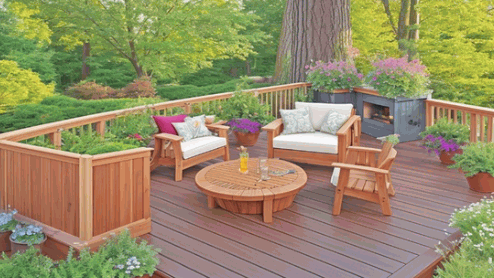

Deck skirting adds both style and practicality to any deck. It gives a finished look and hides the underlying structure, providing privacy and protection from debris and pests. Plus, it can make your outdoor space more inviting and attractive. With various materials and styles, you can customize your deck to suit your preferences and fit your home.
Ventilated panels and gaps between boards offer good ventilation beneath your deck. This prevents moisture buildup, which causes wood rot and other issues. So, proper airflow allows for better drying and reduces the risk of damage.
Furthermore, deck skirting acts as a barrier against animals like raccoons and rodents. This gives you and your deck a secure environment. Plus, it increases privacy, so you can enjoy a secluded outdoor experience.
Finally, you can maximize the use of your deck skirting by building storage solutions. Install hinged doors or access points behind panels or between lattice grids. This way, you can store outdoor essentials such as patio furniture cushions or children’s toys and keep them easily accessible.
Definition Of Deck Skirting
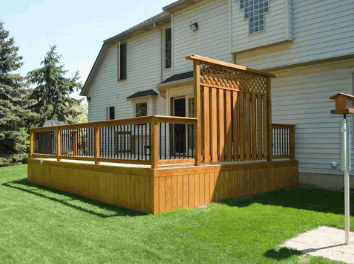
Deck skirting is a decorative panel or material that covers the base of a deck. It conceals the unattractive structure beneath it and adds a pleasant look. It’s an essential part of deck design, creating a clean and polished look. It also serves a practical purpose: keeping pests out, preventing leaves and debris from accumulating, and increasing the longevity of your deck.
You can customize the skirting to match your personal style. There are various options available, such as traditional lattice patterns, modern slatted designs, or stone veneer finishes. According to “Architectural Digest“, adding well-designed and durable skirting to your deck enhances its appearance and increases property value.

Benefits Of Deck Skirting
To enhance the aesthetic appeal of your deck, hide unsightly underdeck areas, add privacy to your outdoor spaces, improve energy efficiency, and prevent pests and animals from entering underneath, turn to deck skirting. This section dives into the benefits of deck skirting, covering each sub-section briefly.
Enhances The Aesthetic Appeal Of The Deck
Deck skirting offers a host of benefits that will take the appearance of your deck to the next level. Here are three key points to consider:
- Conceal unsightly elements: Skirting can hide away foundations, storage spaces, or utilities and create a seamless look.
- Finishing touch: Pick a skirting style, material, and color that will complete your deck design.
- Protection and functionality: Skirting keeps away debris, pests, and critters.
It also provides privacy and ventilation!
For decades, skirting has been used to improve deck aesthetics in all kinds of architectural styles. Now you can do the same! Enhance your outdoor oasis with deck skirting today.
Hides Unsightly Underdeck Areas
Deck skirting is a great way to hide unattractive areas and upgrade the look of your outdoor space! Let’s explore its benefits:
- Curb Appeal: Instantly boosts the appearance of your deck by concealing unsightly underdeck areas.
- Privacy: This creates a sense of privacy and acts as a barrier to prying eyes.
- Pest Deterrent: Blocks potential entry points and keeps insects/rodents away.
- Insulation: Helps regulate temperatures in both hot and cold climates.
- Storage Space: Creates valuable storage space for outdoor items, decorations, etc.
- Low Maintenance: Resistant to rot, mold, and fading. Requires minimal maintenance.
Plus, there are other unique advantages when using deck skirting! For longer-lasting results, opt for durable materials like vinyl or composite boards.
Adds Privacy To Outdoor Spaces
Privacy is hard to come by in today’s world, but deck skirting can give you a sense of seclusion and solitude in outdoor areas. It has more advantages than just being aesthetically pleasing; it offers homeowners the freedom to enjoy their space without feeling exposed.
Plus, deck skirting has many benefits! It:
- Conceals unsightly structures
- Blocks prying eyes
- Enhances relaxation
- Protects from the elements
- Adds value to property
- Promotes creativity in design
When incorporated into the overall design, it creates a cohesive look with depth and intrigue.
The concept of deck skirting dates back to ancient civilizations seeking protection and privacy. Ancient Greeks used materials like reeds and woven branches, while medieval Europeans employed stone cladding. Now, deck skirting maintains this tradition and provides homeowners with a practical and stylish solution.

Improves Energy Efficiency
Upgrading the energy efficiency of your deck is essential. With deck skirting, you can maximize insulation, decrease energy utilization, and reduce utility bills.
- Insulation: Deck skirting acts as an extra insulation layer around the bottom of your deck, decreasing heat exchange between the outdoors and inside.
- Airflow Control: Deck skirting helps to regulate airflow underneath the deck. This stops drafts in colder months and keeps a more comfortable temperature in your home.
- Thermal Barrier: Durable materials in deck skirting form a thermal barrier that minimizes heat loss through conduction.
- Energy Conservation: With improved insulation and managed airflow, you can rely less on heating or cooling systems to maintain indoor comfort. This leads to lower energy usage and a smaller carbon footprint.
- Noise Reduction: Deck skirting also helps with noise reduction by acting as a buffer between the outdoor environment and your living area.
- Aesthetics Included: Aside from its practical benefits, deck skirting improves the overall look of your outdoor space. It provides a polished look while hiding unattractive structural elements.
Plus, deck skirting is available in various materials like vinyl, wood, or composite. Each material offers unique advantages related to durability, maintenance requirements, and design options.
Pro Tip: Use materials with high insulating properties like vinyl for optimal energy efficiency and durability for your deck skirting.
Prevents Pests And Animals From Entering Under The Deck
Deck skirting is a great way to keep pests and critters out. It’s a physical barrier, blocking any entry points for undesirables. Vinyl or composite boards make sure that animals can’t chew through the skirting. This also helps to stop nesting and breeding grounds for pests. Regular maintenance keeps it effective.
Plus, skirting boosts the look of your outdoor space and provides extra storage. Many homeowners have, unfortunately, had run-ins with pests before installing skirting. But, once they did, they’ve been living pest-free ever since!
Types Of Deck Skirting Materials
To understand the various materials available for deck skirting, delve into the types of deck skirting materials. Wood skirting, vinyl skirting, and composite skirting are the solutions that will be explored.
Wood Skirting
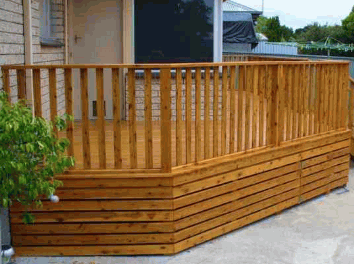
Wood skirting has long-lasting durability, perfect for outdoor decks. Plus, there’s a multitude of wood species to choose from, like cedar, redwood, and treated lumber. Each type has its own unique personality. And, it’s customizable to fit any deck style.
Maintenance is necessary to keep up the look, but it also provides a great opportunity for creativity. For example, staining or painting. Additionally, it’s eco-friendly and renewable.
Vinyl Skirting
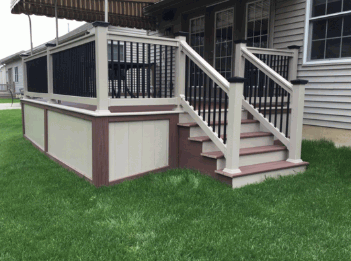
Vinyl skirting is a great choice for deck enclosures! It’s durable, low-maintenance, and provides lots of design choices. It’s also cost-effective and easy to install.
Durability: Vinyl skirting can withstand harsh weather and resist rot and decay. It won’t lose its appearance over time.
Maintenance: Vinyl skirting requires minimal upkeep.
Design Choices: You can find vinyl skirting in various colors, textures, and styles. This allows you to customize your outdoor space.
Installation: Installing vinyl skirting is straightforward and can usually be done by homeowners.
Cost-effective: Compared to other materials like wood or stone, vinyl skirting is often more affordable.
Pro Tip: Inspect your vinyl skirting regularly and address any issues that arise.
By considering all these factors, you can confidently choose vinyl skirting for your deck’s enclosure needs!
Find out more: How To Install A Vinyl Privacy Fence On A Deck
Composite Skirting
Composite skirting can transform your outdoor experience! Here are some of its features and benefits:
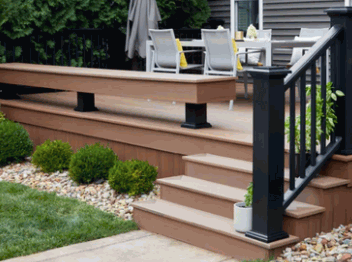
- Durability: Made from a blend of wood fibers and plastic, this skirting is resistant to rot, decay, and insects. No need for frequent repairs or replacements.
- Low Maintenance: No staining, sealing, or painting needed. Just clean it with mild soap and water!
- Aesthetically Pleasing: Comes in a range of colors and finishes. Find the perfect look for your deck.
- Eco-Friendly: Often made from recycled content. Reducing demand for virgin materials and minimizing environmental impact.
- Versatility: Can be cut and molded to fit any size or shape.
Delve into: Can You Pressure Wash Composite Decking
Factors To Consider When Choosing Deck Skirting
To make informed decisions in choosing your deck skirting, consider factors such as durability, maintenance requirements, cost, and style and design. Each of these sub-sections will provide you with valuable insights and solutions on how to select the perfect skirting option for your deck.
Durability
Choose natural stone or bricks for deck skirting. They offer durability against moisture, UV rays, and temperature changes. Plus, they give a rustic touch to your outdoor space.
Composite decking also works. It blends wood fibers and plastic, so it won’t rot, warp, or fade. Plus, it needs minimal maintenance.
Metal skirting panels, like aluminum or steel, are resistant to rust, corrosion, and pests. They’ll also withstand heavy impact without getting damaged.
To make your deck skirting last, provide proper ventilation. This prevents rotting or mold growth. Use protective coatings or sealants too. These protect from environmental elements and extend its lifespan.
Choose a durable material and use maintenance measures. This way, you can make sure your deck looks good and lasts a long time.
Maintenance Requirements
To make sure your deck skirting stays looking good and lasts a long time, you need to take care of it. Let’s look at the 3 key areas: Cleaning, repairs, and protection.
- Cleaning regularly is a must. Sweep away leaves and dirt, then use a power washer for a deep clean. Look for stains that may need special treatment.
- Address repairs quickly. Examine the skirting for any cracks or loose pieces. Replace or fix them to keep the skirting strong. Doing this will save time and money.
- Put in protective measures. Apply a sealant or stain to protect against moisture and UV rays. Make sure it gets enough airflow to stop mold and rot.
Cleaning, repairing, and protecting your deck skirting is worth it. It’ll make your outdoor space look better and last longer.
Cost
Cost is an important factor when choosing deck skirting. Let’s explore the different materials and their associated costs. In the table below, we can see the average cost per square foot for each material.
| Material | Average Cost per Square Foot |
|---|---|
| Vinyl | $3 – $7 |
| Wood | $5 – $10 |
| Composite | $8 – $12 |
Installation costs might vary, as well as maintenance and lifespan of the materials. Calculate the overall cost of deck skirting to make an informed choice. Find an option that fits your budget without compromising on quality or appeal.
Style And Design
When choosing a skirting for your deck, there are several factors to consider. Materials such as wood, vinyl, or lattice should be chosen to complement the existing style. Additionally, select colors that blend with the color scheme of the deck and house exterior. Decide on a pattern that adds visual interest without overwhelming the design.
Take into account the architectural style of your home and select a skirting design to match. Incorporate elements from nature, like plants or rocks, for a more organic look. Contrasting colors between the skirting and the deck can create added visual appeal.
Decorative elements like trim work or molding can add refinement. Installing lighting fixtures along the perimeter of the skirting can enhance the ambiance during nighttime.
The key to creating a beautiful and inviting outdoor space is to carefully consider style and design elements. This will ensure cohesiveness with the overall design and a result tailored to your personal taste.

Installation Process Of Deck Skirting
To ensure a successful installation process of deck skirting, follow these steps with efficient planning and implementation. Begin by taking accurate measurements and proper planning. Prepare the deck and underdeck area accordingly. Choose the most suitable installation method. Install the skirting panels or boards securely. Finally, add the finishing touches to complete the deck skirting installation.
Measurements And Planning
For successful deck skirting installation, measurements and planning are key. Accurate measurements are essential for the perfect outcome. The table below provides important details to be taken into account:
| Measurement | Description |
|---|---|
| Height | Choose the height that fits the purpose and design of your outdoor space. |
| Length | Measure the deck perimeter to know how much material is needed. |
| Gaps | Put space between panels or boards for airflow and privacy. |
| Material | Pick a durable and appropriate material, such as wood, composite, or vinyl, that fits your budget and complements your deck’s look. |
Besides measurements, there may be other factors. Local building codes and homeowner associations may impose regulations and guidelines.
Preparing The Deck And Underdeck Area
Having a deck is great for enjoying the outdoors. Transform the area underneath it by adding deck skirting. To do this right, you must prepare the area and deck.
- Clear out any clutter from the under deck.
- Sweep or power wash to have a smooth surface.
- Inspect the deck for any loose boards or issues. Tighten them and replace any damaged boards.
- Measure the height of the skirting material. Cut it with a saw or other tools.
- Afterward, attach it to the posts or framework.
- For better ventilation, leave a small gap between each panel of skirting material.
Enjoy the fresh air and privacy!
Choosing The Installation Method
Choosing the right deck skirting installation method is key to a flawless look. This guide will help you decide.
- Check your options. You can use lattice panels, solid boards, or natural materials like stones or bricks. They all offer a unique style and purpose.
- Figure out how much privacy you want. Solid boards or natural materials offer more concealment. Lattice panels let in air and visibility.
- Think about upkeep. Solid boards might need staining or painting. Lattice panels might need cleaning or repairs. Consider how much effort you’re willing to invest.
- Don’t forget your budget. Choose an option that fits your budget without sacrificing quality or aesthetics.
Plus, make sure the installation method works with your deck design and its environment.
Installing The Skirting Panels Or Boards
- Measure and cut: Measure the deck perimeter. Cut skirting panels or boards to fit snugly against the deck structure.
- Attach framing: If necessary, use screws or nails to attach framing around the deck perimeter for additional support.
- Install bottom rail: Put a bottom rail along the deck base. This will guide the attachment of skirting panels and provide stability.
- Secure the panels: Attach panels to the bottom rail with screws or nails. Align and space them evenly. Repeat until all the panels cover the perimeter.
- Trim and finish: Trim the excess material with a saw or cutting tool. Sand any rough edges. Paint or stain to match the deck’s look.
- Add finishing touches: Enhance the skirting with decorative lattice screens or vents for airflow.
Suggestions:
- Choose high-quality materials: Pick materials that are durable and weather-resistant.
- Maintain proper ventilation: Allow airflow under the deck with vents. This prevents moisture buildup and rot.
- Consider accessibility: Leave removable sections for easy access.
Follow these steps and suggestions to successfully install skirting for your deck. Transform it into a beautiful and functional outdoor space.
Adding Finishing Touches
Giving your deck skirting the perfect finish is a must-do! Not only will it look great, but also bring many benefits. Let’s look at four important points to consider:
- Color: Pick a hue that complements and blends into the deck and surroundings. A stain or paint that matches or contrasts the color scheme is ideal.
- Decorations: For extra elegance, try lattice panels or ornamental screens. You can customize them for your style and boost the aesthetics.
- Lighting: Install LEDs or solar-powered fixtures around your skirting for a cozy evening ambiance. Plus, it has safety and functionality.
- Clean & Accessible: Clean regularly to avoid dirt and moisture build-up that can damage your skirting. And, make sure utilities and storage areas are easy to access with removable panels or hinged gates.
Remember, investing time and effort into these finishing touches not only looks great but also extends the lifespan of your deck skirting, saving you from costly repairs in the future. The goal is to align functionality and design for a smooth integration with your deck.
Tips For Maintaining Deck Skirting
To effectively maintain your deck skirting and ensure its longevity, follow these tips. Regular cleaning and inspection, treating or sealing the skirting materials, and repairing or replacing any damaged skirting will provide the necessary solutions. By implementing these strategies, you can keep your deck skirting in optimal condition, protecting both its appearance and functionality.
Regular Cleaning And Inspection
Steps to clean and inspect deck skirting:
- Sweep or blow away any dirt, leaves, or debris from the skirting.
- Use a brush plus mild detergent to scrub off any hard-to-remove stains.
- Inspect the skirting for any signs of rot, mold, or pests.
- Tighten any loose boards or panels.
- Make sure the skirting is connected to the deck and secure.
- Apply a sealant or paint to give extra strength and beauty.
Additionally, regular cleaning and inspection can uncover details about your deck skirting. Keep an eye out for cracks and gaps that need urgent attention. This practice of inspecting and cleaning has been around for centuries. So, use this ancient knowledge to protect your deck skirting from nature’s fury.
Overall, cleaning and inspecting your deck skirting is a must. Do this to make sure your outdoor area is safe and attractive for years to come.
Treating Or Sealing The Skirting Materials
To keep your deck skirting long-lasting, it’s essential to treat/seal the materials. This guards them from moisture, UV rays, and other environmental factors that may cause damage. Here’s a guide on how to treat/seal your deck skirting:
- Pick the right product: Get a high-quality treatment/sealant for outdoor use. Something that guards from water damage, rotting, fading, and cracking.
- Ready the materials: Clean the skirting materials with a soft brush or pressure washer. Then let them dry completely.
- Apply treatment/sealant: Use a paintbrush or roller to apply the product evenly. Cover areas exposed to moisture or sun. If needed, use multiple coats, following the manufacturer’s directions on drying time.
- Monitor & maintain: Once it’s dry, inspect the skirting for wear/damage. Touch up any spots that have been affected by weather or physical impact.
Note: Each skirting material may require specific treatments/sealants. Always refer to the manufacturer’s guidelines.
Pro Tip: Put a waterproofing membrane on your treated deck skirting for extra protection against water and staining. This will make the skirting look new for years.
Repairing Or Replacing Damaged Skirting
- Assess the damage to your deck skirting: Carefully inspect for cracks, rot, or other signs of damage.
- Repair or replace, depending on the severity.
- To replace, use a pry bar or screwdriver to remove the damaged boards.
- Measure and cut new boards to fit the dimensions.
- Securely fasten with nails or screws.
- Apply a weather-resistant sealant or paint for protection.
- Also, use pest-resistant materials and implement pest control measures.
Maintaining the skirting is important for its structural integrity. Address any damage promptly. Do regular upkeep to ensure a beautiful and safe deck for years.

Conclusion
Deck skirting has many benefits. It gives your deck a better appearance and offers practical advantages. By covering the area underneath your deck, you can keep away unattractive items or animals. It also stops pests from entering and keeps moisture out, which can damage your deck’s structure.
A special feature is that you can add design elements to your deck skirting. For example, lattice patterns and decorative screens. These will make your deck look beautiful and show off your personal style. An extraordinary outdoor retreat awaits you!